
Short answer: What a water heater repair costs depends mostly on which part has failed, whether the unit is gas, electric, or tankless, and how easy it is to reach. National cost guides put common repairs such as a heating element, thermostat, or thermocouple roughly in the low hundreds of dollars. Replacing a standard 50-gallon tank in Dallas is often quoted between about $1,300 and $1,900 installed. The exact figure for your home can only come from an on-site diagnosis and a written quote.
This guide explains what drives the price, which repairs tend to be inexpensive and which are not, and how to compare quotes. We have not published our own prices here. Instead, the ranges below come from published cost guides, linked so you can check them yourself.
Published price ranges for common repairs
The figures below are national or regional averages from cost-guide websites. They are a starting point for budgeting, not a quote. Local labor rates, part prices, and the condition of your heater can push the real cost higher or lower.
| Repair or job | Published range or average | Source |
|---|---|---|
| Typical water heater repair (overall) | About $297 to $1,198 nationally | Thumbtack |
| Replace thermostat and/or heating element (electric) | About $150 to $200 | Thumbtack |
| Clean and repair thermocouple (gas) | About $395 | Thumbtack |
| Average repair, all types | About $500 | Inch Calculator |
| Replace a standard 50-gallon electric tank in Dallas | About $1,300 to $1,700 installed | HomeBlue |
| Replace a standard 50-gallon gas tank in Dallas | About $1,300 to $1,900 installed | HomeBlue |
Ranges as published by each source at the time of writing. Check the linked pages for their methods and latest updates.
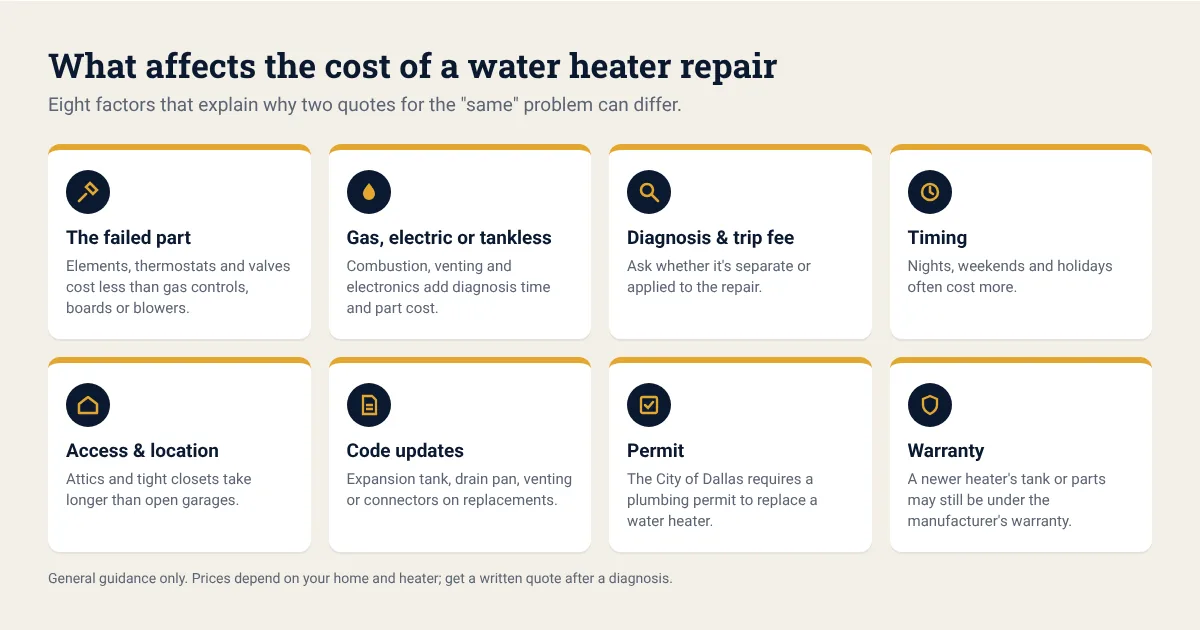
What makes a water heater repair cost more or less
1. The part that failed
Parts like electric heating elements, thermostats, and drain valves are relatively inexpensive, so labor is most of the bill. Gas control valves, circuit boards in tankless units, and power-vent blowers cost more. A leak from the tank itself is usually not a repair at all. It means replacing the heater, which our guide on water heater leaks explains.
2. Gas, electric, or tankless
Gas heaters involve combustion and venting, so diagnosis and safety checks take more time. Electric heaters are usually simpler to diagnose. Tankless units have more electronics and often need model-specific parts. Descaling a tankless heater is a separate maintenance job from repairing a failed component.
3. Diagnosis and the service call
Many companies charge a diagnostic or trip fee, and some apply it toward the repair. Ask how it works before the visit. A clear diagnosis can save money, because replacing parts by guesswork costs more than finding the real fault.
4. Timing
Evenings, weekends, and holidays often cost more. Waiting a few hours might be fine for a heater that just stopped heating. It isn’t worth waiting with an active leak, though. Turn off the water and the heat source first, then decide how urgent the visit really is.
5. Access and installation location
A heater in an open garage is quicker to work on than one in a tight closet or an attic. Difficult access adds time to both repairs and replacements, and attic replacements may need extra labor to move the old and new tanks.
6. Code-required updates
When a heater is replaced, the installation has to meet current code. That can mean adding or updating parts such as a thermal expansion tank, a drain pan, seismic or support strapping where required, gas connectors, or venting. These items are sometimes the difference between a low quote and a higher one. Ask each contractor what’s included.
7. Permits
In the City of Dallas, replacing a water heater requires a plumbing permit from the City’s Building Inspection division. Permit fees are part of the replacement cost, so confirm that the quote includes pulling the permit. Suburbs set their own permit rules and fees.
8. Warranty coverage
Many water heaters come with a manufacturer’s warranty on the tank and some parts. The terms and length vary by model. If your heater is relatively new, check the rating label and the manufacturer’s warranty information before paying for a part that might be covered. Labor is often not included.
Repairs that are usually worth it, and ones that usually aren’t
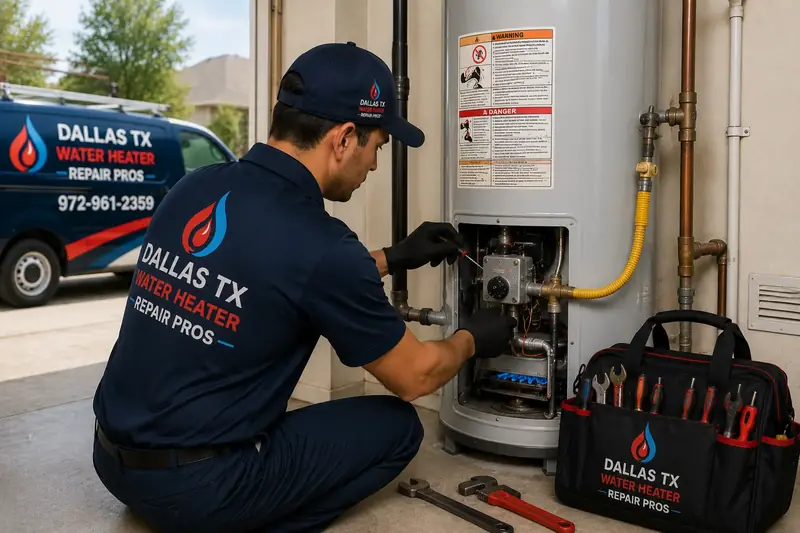
A repair usually makes sense when the heater is relatively young and the problem is a single replaceable part, such as an element, a thermostat, a thermocouple, a drain valve, or a relief valve. It usually doesn’t make sense when the tank itself is leaking, when the heater is near the end of its expected life and needs an expensive part, or when it keeps breaking down. Our guide on repair vs. replacement goes through that decision step by step.
How to get an accurate quote
- Describe the symptom clearly. Say whether there’s no hot water, lukewarm water, a leak, or noise. Mention gas or electric, the tank size, and the approximate age. Our troubleshooting guide for a water heater that’s not heating helps you describe it.
- Share the rating label. A photo of the label shows the model, the serial number, and often the manufacture date.
- Ask what’s included. Is the diagnostic fee separate? Does a replacement quote include removal of the old unit, code updates, and the permit?
- Compare written quotes. For a replacement, comparing a few written quotes from qualified plumbers is reasonable. Plumbers in Texas are licensed by the Texas State Board of Plumbing Examiners, where you can verify a license.
Get a diagnosis in Dallas
If you’d like a clear answer about what’s wrong and what it will cost to fix, call us at (972) 961-2359. We answer 24/7. You can also request a visit online or read more about our water heater repair service in Dallas.
Frequently asked questions
Is it cheaper to repair or replace a water heater?
A single-part repair is almost always cheaper upfront than replacing the heater. Replacing it can still be the better value if the tank is leaking, the heater is near the end of its life, or repairs keep adding up.
Why do water heater repair quotes vary so much?
Quotes differ because of diagnostic fees, after-hours rates, part quality, access, and whether code updates or permits are included. Ask each company what its quote covers so you’re comparing the same scope of work.
Does homeowners insurance pay for water heater repairs?
Policies differ. Many cover sudden water damage caused by a leak but not the heater itself or wear and tear. Check your own policy or ask your insurer.
Do I need a permit to replace a water heater in Dallas?
Yes. In the City of Dallas, water heater replacements require a plumbing permit through Building Inspection. If you live in a nearby city, check with that city’s building department.
The bottom line
The cost of a repair comes down to the failed part, the type of heater, access, timing, and whether code updates or permits are involved. Use published ranges to budget, but rely on a written quote based on a real diagnosis before you decide.