
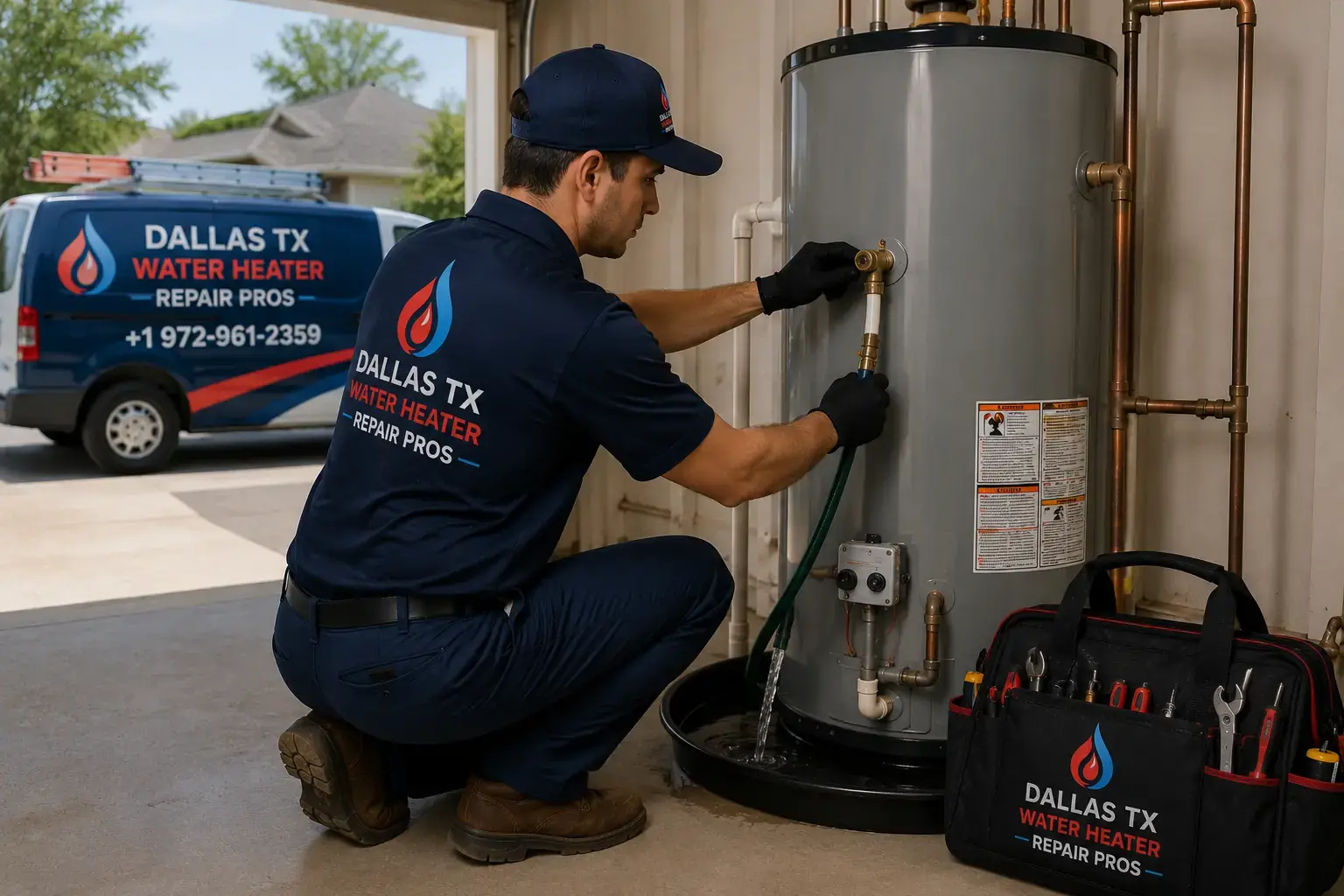
Short answer: A tank water heater needs a few simple things to last: keep the temperature at a safe setting (about 120°F), flush the sediment out regularly, check the anode rod every few years, keep an eye on the temperature and pressure relief valve, and look for leaks and venting problems. Homes with mineral-heavy water usually need flushing more often. Tankless units need periodic descaling as the manufacturer specifies. Some of these jobs are fine for a careful homeowner. Others, especially anything involving gas, electrical parts, or the relief valve on an old heater, are best left to a professional.
Why maintenance matters
Most of the problems we see in water heaters build up slowly. Minerals in the water settle at the bottom of the tank as sediment. The anode rod, a metal rod that corrodes instead of the tank, gets used up. Valves wear. Left alone, these lead to lower efficiency, noisy operation, less hot water, and eventually leaks. Regular maintenance can’t make a heater last forever, but it can help it reach the full lifespan you’d expect and helps you spot problems early.
Does hard water matter in Dallas?
Water hardness depends on your water supplier and can vary across the metro area. Harder water leaves more mineral scale in tanks, on heating elements, and inside tankless heat exchangers. If you don’t know how hard your water is, a simple test kit from a hardware store will tell you. You can also check whether your home has a water softener. The harder your water, the more often flushing and descaling pay off. The City of Dallas publishes its annual water quality report if you want to learn more about your supply.
Your water heater maintenance checklist
1. Set a safe temperature
The U.S. Consumer Product Safety Commission recommends about 120°F to reduce the risk of tap water scalds. CPSC notes that water at 150°F can cause serious burns in seconds. A lower setting also reduces how quickly minerals come out of the water inside the tank. If you have special needs, such as a medical reason for a different setting, ask a professional about adding mixing valves.
2. Flush sediment from the tank
Flushing means draining water out through the drain valve near the bottom of the tank to carry away sediment. How often depends on your water and your heater. Many manufacturers recommend periodic draining in the owner’s manual, and homes with harder water benefit from flushing more often, commonly once or twice a year.
Signs you’re overdue: popping or rumbling sounds when the heater runs, hot water running out sooner than it used to, and gritty particles in faucet aerators. For noisy tanks, see our page on tank water heater repair.
3. Check the anode rod
The anode rod protects the steel tank by corroding first. When it is mostly gone, the tank starts to corrode. Checking it means unscrewing it from the top of the tank. It’s often very tight and sometimes needs special tools or extra clearance. Many homeowners have it checked during a professional service visit. Replacing a worn anode rod costs far less than replacing a tank.
4. Keep an eye on the temperature and pressure relief valve
The T&P relief valve is a safety device that opens if the water gets too hot or the pressure too high. Rheem’s technical bulletin on thermal expansion and T&P valves recommends inspecting and testing these valves periodically. Follow the instructions in your own heater’s manual. Be aware that on an older valve, testing can cause it to keep dripping afterward. If you aren’t comfortable, have a professional do it. Never cap or plug the relief valve or its discharge pipe.
5. Look for leaks and corrosion
Every few months, check the pipe connections on top of the heater, the drain valve, the relief valve pipe, and the floor or drain pan underneath. Rust at fittings or water stains are early warnings. Our guide to water heater leaks explains what each leak location means.
6. Gas heaters: keep the area clear and check the venting
Keep stored items, especially paint, gasoline, and cleaning chemicals, well away from a gas water heater. Make sure the vent pipe on top is intact and properly connected. Signs of venting problems, such as soot, a burning smell, or repeated shutdowns, need a professional right away. If you ever smell gas, leave the home and call 911 and your gas utility from outside. Atmos Energy explains what to do if you suspect a gas leak.
7. Tankless heaters: descale on schedule
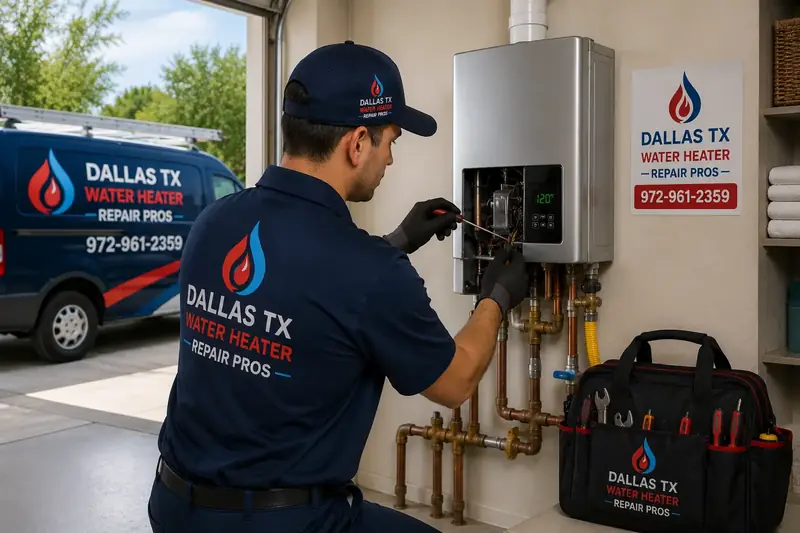
Tankless water heaters don’t collect sediment the way tanks do, but mineral scale can build up inside the heat exchanger. Most manufacturers specify periodic descaling, flushing a descaling solution through the unit, and many also call for cleaning the inlet water filter. Check your manual for the interval, because skipping it can affect performance and warranty coverage. Read more about tankless water heater service.
How to flush a tank water heater (overview)
If your heater is in good condition and you’re comfortable with basic plumbing tasks, flushing is a common DIY job. Follow your owner’s manual first. The general process looks like this:
- Turn off the heat source. Switch off the breaker for an electric heater. For a gas heater, set the gas control to PILOT or VACATION as the label describes.
- Let the water cool for a few hours if you can. Water from the tank can scald.
- Shut off the cold water supply to the heater.
- Attach a garden hose to the drain valve and run it to a floor drain, outside, or another safe place that can handle hot water.
- Open a hot water faucet somewhere in the house to let air in, then open the drain valve.
- Drain and rinse. Once the tank has drained, briefly open the cold supply to stir up sediment, and repeat until the water runs clear.
- Close the drain valve and refill with the hot water faucet open until water flows steadily from the faucet, which means the tank is full.
- Restore the heat source. Never turn an electric heater back on before the tank is completely full, because heating elements can burn out in seconds without water around them.
When not to DIY: If the heater is old and has never been flushed, if the drain valve is plastic and brittle, or if you see rust at the bottom, flushing can stir up enough sediment to clog the valve, or reveal a leak. In those cases, it’s safer to have a professional look first.
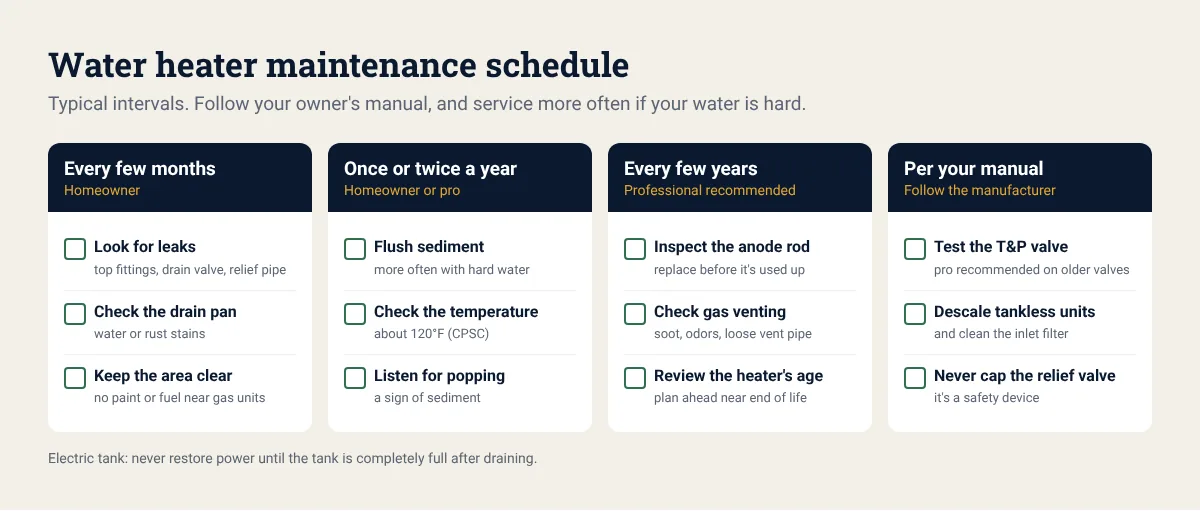
A simple maintenance schedule
| Task | How often (typical) | Who |
|---|---|---|
| Look for leaks, rust, and water in the pan | Every few months | Homeowner |
| Check the temperature setting | Once a year, or if water seems too hot or cold | Homeowner |
| Flush sediment (tank heaters) | Once or twice a year, more often with hard water | Careful homeowner or professional |
| Test the relief valve | As your heater’s manual specifies | Professional recommended on older heaters |
| Inspect the anode rod | Every few years, more often with hard water | Professional recommended |
| Descale (tankless heaters) | As the manufacturer specifies | Professional or experienced homeowner |
| Gas venting and combustion check | During any service visit, or if you notice soot or odors | Professional |
Professional maintenance in Dallas
If you’d rather not drain a tank of hot water yourself, or want the anode rod, relief valve, and venting checked at the same visit, call us at (972) 961-2359. We answer 24/7. You can also book a visit online. If a maintenance check turns up a problem, our water heater repair service can take it from there.
Frequently asked questions
How often should I flush my water heater?
Follow your owner’s manual. As a general guide, many homes flush once a year, and homes with harder water benefit from doing it more often. If you hear popping or rumbling, it’s probably overdue.
What happens if I never flush my water heater?
Sediment builds up, which can reduce efficiency and hot water capacity, cause noise, and contribute to overheating at the bottom of the tank and earlier failure. On electric heaters, sediment can bury the lower element.
Is it safe to flush a very old water heater?
Sometimes not. Flushing an old tank that has never been maintained can clog the drain valve with sediment or uncover a leak. Have it inspected first.
Do tankless water heaters need maintenance?
Yes. Most need periodic descaling and filter cleaning, as the manufacturer specifies. Scale buildup is one of the most common reasons tankless units lose performance or show error codes.
What temperature should my water heater be set to?
The CPSC recommends about 120°F for most homes to reduce the risk of scalding.
The bottom line
A safe temperature setting, regular flushing, an occasional anode rod check, attention to the relief valve, and quick action on small leaks are what keep a water heater running well. If your water is hard, do these more often. Leave gas, electrical, and relief valve work on older heaters to a professional.