
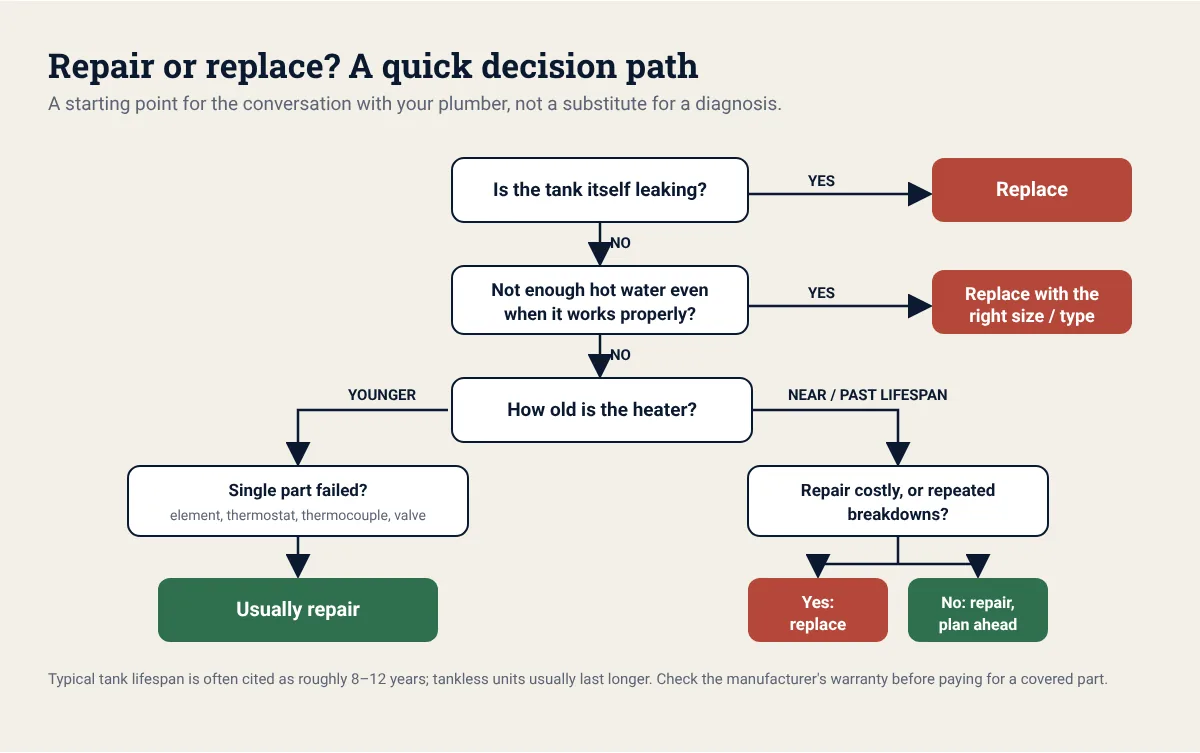
Short answer: Repair the water heater if it is fairly young, the tank is not leaking, and the problem is a single replaceable part such as an element, thermostat, thermocouple, or valve. Replace it if the tank itself is leaking, the heater is near or past its expected lifespan and needs an expensive repair, it keeps breaking down, or it no longer produces enough hot water for your household. A common rule of thumb: if the repair costs approach half the price of a new installed heater, and the unit is getting old, replacement is usually the better value.
Step 1: Find out how old your water heater is
Age is the single most useful number in this decision. The rating label on the side of the heater shows the model and serial number, and most manufacturers encode the manufacture date in the serial number. The format differs by brand, so look up your manufacturer’s guide for decoding it, or send a photo of the label to your plumber.
How long will it last? Published estimates vary, but a traditional tank heater lasting roughly 8 to 12 years is a common benchmark. Tankless units often last considerably longer. Water quality, maintenance, installation, and usage all affect where your heater falls in that range. Mineral-heavy water and a tank that has never been flushed tend to shorten tank life.
Step 2: Identify what is actually wrong
Some problems are routine repairs that can give an otherwise healthy heater years more service. Others are signs the tank is wearing out.
Problems that are usually worth repairing
- Failed heating element or thermostat on an electric heater.
- Thermocouple, flame sensor, or pilot assembly on a gas heater.
- Leaking drain valve or a loose pipe connection.
- Dripping relief valve caused by thermal expansion or high water pressure. The fix is often an expansion tank or a pressure-reducing valve, not a new heater.
- Broken dip tube causing lukewarm water.
Not sure which applies to you? Start with our guide on a water heater that’s not heating.
Signs that point toward replacement
- Water leaking from the tank itself. A corroded tank can’t be reliably repaired. See how to tell where a water heater leak is coming from.
- Rusty hot water, while the cold water is clear. That can mean the inside of the tank is corroding. Have it checked, since rusty pipes or a worn anode rod can cause similar symptoms.
- Repeated breakdowns. If you’re calling for a repair every few months, the parts and service calls add up.
- Heavy sediment and loud rumbling in an older tank that has rarely been flushed. Sediment can be flushed, but years of buildup can mean the tank is close to the end of its life.
- Not enough hot water for your needs. If the heater works correctly but is simply too small, repairing it won’t help.
Step 3: Compare the cost of repair with the cost of replacement
Cost guides commonly suggest considering replacement when a repair approaches about half the cost of a new heater, especially on an older unit. As a reference point, published Dallas estimates for replacing a standard 50-gallon tank are around $1,300 to $1,900 installed, depending on fuel type and the job. Our article on water heater repair costs in Dallas explains what drives the cost of individual repairs.
| Situation | Usually the better choice |
|---|---|
| Young heater, single inexpensive part failed | Repair |
| Young heater, tank leaking | Replace (check the manufacturer’s tank warranty first) |
| Older heater, minor repair, no other issues | Repair is reasonable, but start planning for replacement |
| Older heater, expensive repair or repeated failures | Replace |
| Any age, heater too small for the household | Replace with the right size or type |
Step 4: If you replace, choose the right replacement
A replacement is an opportunity to fix problems the old heater had. Things to discuss with your plumber:
- Size. Base it on your household’s peak hot water use, not only the size of the old tank. A heater that runs out every morning is a sizing problem.
- Fuel and type. Gas tank, electric tank, heat pump (hybrid) electric, or tankless. Each has different installation needs, operating costs, and maintenance requirements. Switching types can involve new gas lines, venting, or electrical circuits.
- Code requirements. New installations must meet current code. That can include an expansion tank, a drain pan, proper venting, and correct relief valve discharge piping.
- Permits. In the City of Dallas, water heater replacements require a plumbing permit from Building Inspection. Make sure your installer includes it.
- Licensed installation. Plumbing work in Texas is regulated by the Texas State Board of Plumbing Examiners, where you can verify a plumber’s license.
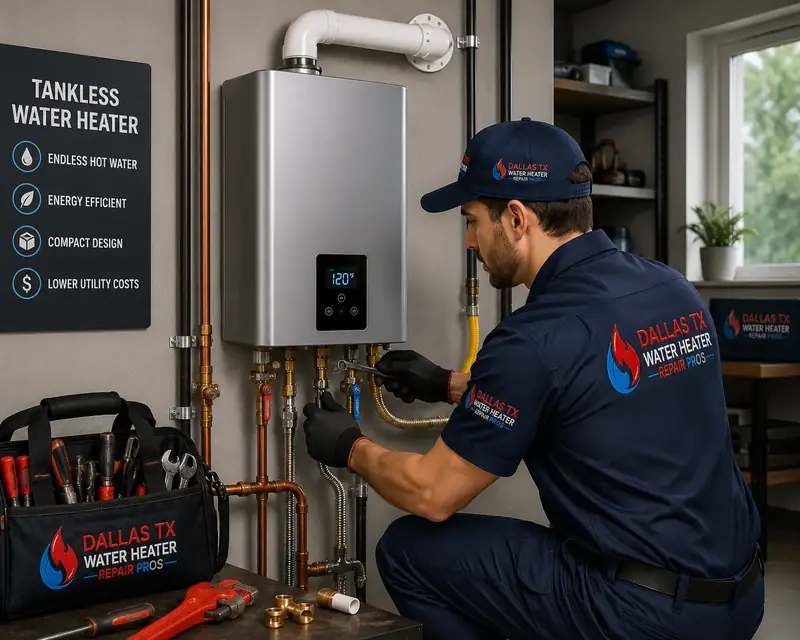
If you’re replacing a tankless unit or considering switching to one, our page on tankless water heater service covers what’s involved.
Step 5: Extend the life of whichever heater you keep
Whether you repair or replace, routine care helps the heater last. That means flushing sediment, checking the anode rod, keeping the temperature at a safe setting, and keeping an eye on the relief valve. Our water heater maintenance guide for Dallas homes explains each step and which ones are best left to a professional.
Need a second opinion?
If you’ve been told you need a new water heater and want to know whether a repair is possible, or the other way around, call us at (972) 961-2359. We answer 24/7. You can also send us a request, or see our Dallas water heater repair page and our full list of services.
Frequently asked questions
Should I repair or replace a 10-year-old water heater?
At around 10 years, a tank heater is in the age range where replacement often makes sense. A simple, inexpensive repair on a heater that has been well maintained and isn’t leaking can still be reasonable. A leaking tank or a costly repair at that age usually points to replacement.
Is it worth repairing a leaking water heater?
That depends on where the leak is. Leaks from fittings, the drain valve, or the relief valve are usually repairable. A leak from the tank body generally means the heater needs to be replaced.
How do I know if my water heater is about to fail?
Warning signs include water around the base, rusty hot water, rumbling or popping noises, hot water that runs out faster than it used to, and frequent repairs. Any one of these on an older heater is a good reason to have it inspected.
Can I replace a water heater with a different size or type?
Yes, but changing size or fuel type can affect the venting, gas piping, electrical service, and space required. A plumber can tell you what the change would involve in your home.
The bottom line
Age, the type of problem, and cost decide this. A young heater with a single failed part is usually worth repairing. An old heater with a leaking tank, an expensive repair, or repeated breakdowns is usually worth replacing. Get a proper diagnosis before you decide.