
Short answer: Where the water is coming from tells you how serious a water heater leak is. Leaks from the pipe connections on top, the drain valve, or the relief valve pipe can usually be repaired. Water seeping from the tank itself, often from the bottom, usually means the inner tank has corroded through, and the heater needs to be replaced. Whatever the source, the first steps are the same: turn off the heat source and the cold water supply, and limit the damage.
What to do right now
- Stay safe. Water near electrical equipment and hot water under pressure are both hazards. If water is pooling near outlets or wiring, don’t stand in it while touching anything electrical.
- Turn off the heat source. For an electric heater, switch off its breaker. For a gas heater, turn the gas control knob on the unit to OFF or PILOT, as described on the heater’s label. If you smell gas at any point, leave the house and follow the gas leak guidance below.
- Shut off the cold water supply to the heater. There is usually a valve on the cold water pipe above the heater. Turning it off stops more water from entering the tank. If that valve won’t turn, you can shut off the main water valve to the house.
- Contain the water. Move belongings away, use towels or a wet vacuum, and check whether the drain pan under the heater (if there is one) is overflowing.
- Don’t drain a hot tank in a hurry. The water can be hot enough to scald. Unless the leak is severe, wait for a professional or let the water cool first.
Gas smell? Leave immediately, don’t operate switches, and call 911 and your gas utility from outside. Atmos Energy, which serves much of North Texas, explains how to recognize and report a gas leak.
Find where the leak is coming from
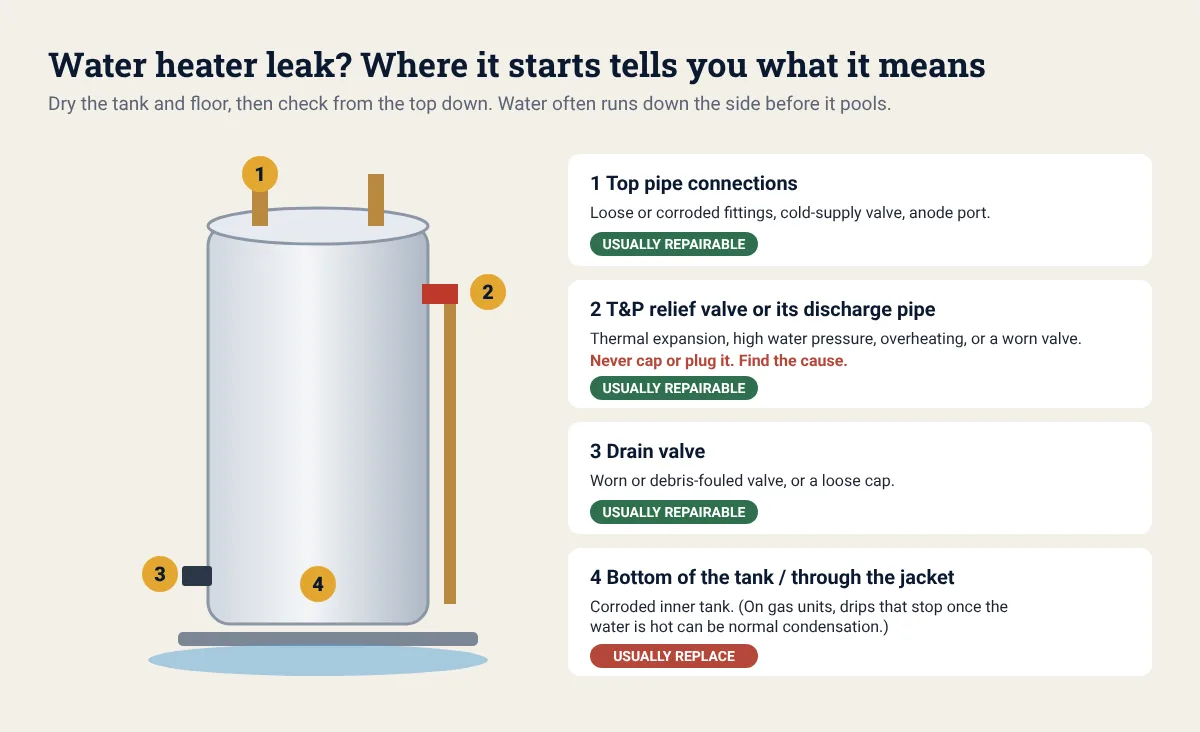
Dry the outside of the heater and the floor, then watch for where water reappears. Water often runs down the side of the tank and collects underneath, so a puddle at the bottom doesn’t always mean the leak starts there. Check from the top down.
Leaking from the top
The top of a tank heater has the cold water inlet, the hot water outlet, and on many models the relief valve and anode rod port. Leaks here are often caused by:
- Loose or corroded fittings on the inlet or outlet pipes, including the short threaded nipples screwed into the tank.
- A failing shut-off valve on the cold supply line.
- Leaks from the anode rod fitting, especially on older tanks.
Top leaks are usually repairable, because they involve fittings and valves rather than the tank. Corroded connections tend to get worse, so have them fixed promptly.
Leaking from the temperature and pressure relief valve
The T&P relief valve is a critical safety device. It opens to release water if the temperature or pressure in the tank gets too high. Its discharge pipe usually runs down the side of the heater toward the floor or to a drain. Water coming from this pipe means one of the following:
- Thermal expansion. Water expands when it’s heated. In homes where the plumbing is a “closed system”, for example because of a backflow preventer or a pressure-reducing valve, the expanded water has nowhere to go and pressure builds. Rheem’s technical bulletin on thermal expansion says a typical sign is a small discharge during each heating cycle. It recommends a thermal expansion tank as the fix.
- High water pressure coming from the street supply.
- Water that is too hot, for example because of a thermostat or control problem.
- A worn valve that no longer seats properly.
Never cap, plug, or remove a relief valve or its discharge pipe to stop the drip. Without a working relief valve, an overheated or over-pressurized tank can fail violently. A dripping relief valve is a sign to have the system checked, not to disable the safety device.
Leaking from the drain valve
The drain valve near the bottom of the tank is used for flushing. Valves, especially plastic ones, can drip from the spout or around the stem after years of use or after being opened. Sometimes the cause is just a loose cap, or debris stuck in the valve. A leaking drain valve can normally be replaced without replacing the heater.
Leaking from the bottom of the tank
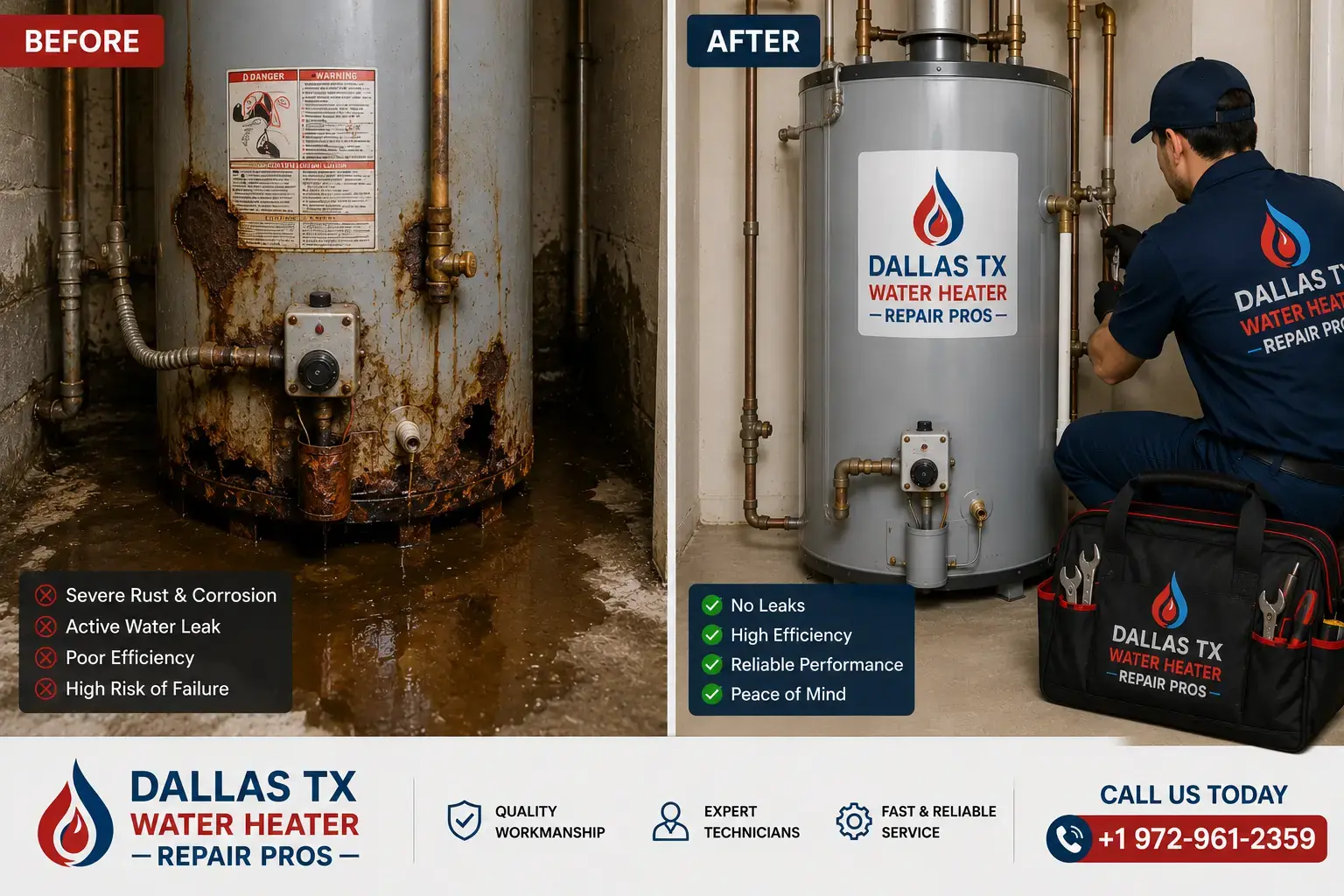
If water is coming from underneath the tank or through the outer jacket, and not from any of the fittings above, the inner steel tank has most likely rusted through. A corroded tank can’t be patched reliably. The heater needs to be replaced, and the leak can suddenly get worse, so plan the replacement soon.
One exception: on gas heaters, condensation can form when a tank full of cold water first heats up, and it can drip onto the burner area. Condensation should stop once the water is hot. If water keeps appearing after the tank is fully heated, treat it as a real leak.
Leaking from a tankless water heater
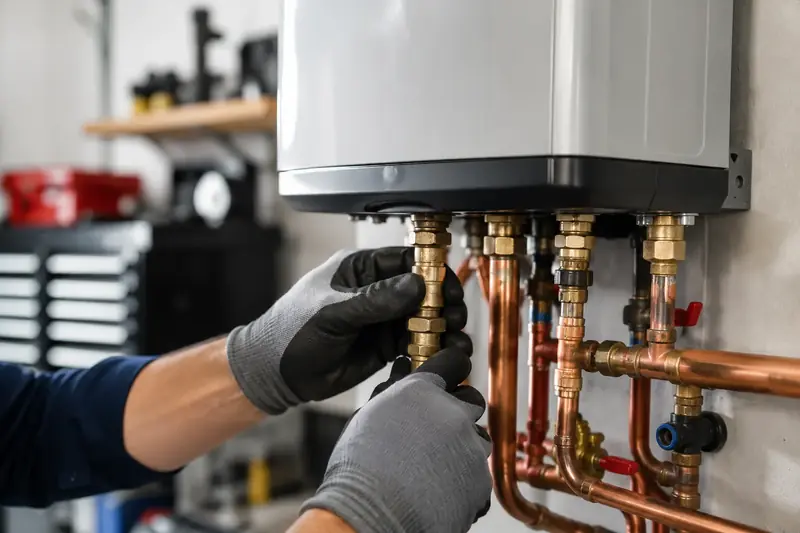
Tankless units can leak from pipe connections, pressure relief valves, or internally from the heat exchanger. Many also show an error code. Turn off the unit and the water supply and have it inspected. See our page on tankless water heater repair.
Repairable leak or time to replace?
| Where it leaks | Likely cause | Usually |
|---|---|---|
| Top pipe connections | Loose or corroded fittings, valve | Repairable |
| Relief valve discharge pipe | Thermal expansion, high pressure, overheating, worn valve | Repairable once the cause is found |
| Drain valve | Worn or debris-fouled valve, loose cap | Repairable |
| Bottom of the tank / through the jacket | Corroded inner tank | Replace the heater |
| Drips that stop once the water is hot (gas) | Condensation | Normal, monitor |
Age matters, too. A heater near the end of its expected life with a leaking fitting may still be worth replacing, especially if it has other problems. Our guide on repairing vs. replacing a water heater explains how to weigh it up, and water heater repair costs in Dallas covers what affects the price.
Limiting water damage next time
- Make sure there’s a drain pan under heaters installed in attics, closets, or above finished floors, and that the pan drains to a suitable location.
- Consider a leak detector or an automatic shut-off valve near the heater.
- Have the relief valve and the area around the tank checked during routine maintenance. Our maintenance guide lists what to look for.
- Keep the area around the heater clear so a small leak gets noticed early.
If a water heater in the City of Dallas has to be replaced, the City’s Building Inspection division handles plumbing permits. Water heater replacements require a permit there, so ask whoever installs your new heater to pull it.
Need help with a leaking water heater in Dallas?
If you’ve shut off the water and power or gas and still aren’t sure where the leak is coming from, call us at (972) 961-2359. We answer 24/7. For an active leak that is spreading, see our emergency water heater repair page, or contact us online.
Frequently asked questions
Is a leaking water heater dangerous?
It can be. The main risks are water damage, electrical hazards when water reaches wiring, scalding, and, on gas units, problems with combustion or venting. A relief valve that discharges often can be a sign of excessive temperature or pressure, which should be checked promptly.
Can I still use my water heater if it’s leaking?
It’s safest not to. Turn off the heat source and the cold water supply until you know where the leak comes from. A small drip from a fitting may not be urgent, but a tank leak can get worse without warning.
Why is my water heater leaking from the bottom but the tank looks fine?
Water often travels down the tank from a fitting at the top or from the relief valve pipe. It can also be condensation on a gas unit, or a dripping drain valve. Dry everything and check from the top down before deciding the tank has failed.
Can a leaking water heater tank be repaired?
Leaks from fittings, the drain valve, or the relief valve can usually be fixed. A leak from the steel tank itself generally can’t be repaired reliably, and the heater should be replaced.
The bottom line
Turn off the heat source and the water supply, contain the water, then find where the leak starts. Fittings and valves are usually repairable. A leak from the tank itself means it’s time for a new heater. Never disable the relief valve to stop a drip, because it’s there to prevent a much more dangerous failure.