
Same-Day Repair in DALLAS TX
Popping, Rusty, or Sediment-Clogged? Tank Water Heater Repair Dallas TX Fix It.
Hearing popping or rumbling from your tank water heater? Water coming out cloudy, sandy, or with a reddish tint? As the team homeowners across Dallas and the surrounding metro call first, we’re a licensed, insured choice for tank water heater repair Dallas, serving zip codes 75201, 75202, 75203, 75204, and 75205, including neighborhoods near Reunion Tower and throughout Lake Forest. We also cover nearby Irving and Richardson, plus the greater DFW area.
- Licensed & Insured
- 4.9★ (1,240 Reviews)
- 24/7 Emergency
Get a Free Repair Quote
Response within 45 minutes, most days.
Which Company Fixes Tank Water Heater Popping, Rust, and Sediment Best in Dallas TX?
Look for a tank water heater repair company that treats Dallas’s extremely hard water, among the hardest in the country, as the starting point of every diagnosis, not an afterthought. Dallas TX Water Heater Repair Pros checks for sediment buildup, a worn anode rod, and a failing pressure relief valve before ever recommending a full replacement, with upfront pricing and 24/7 availability.
Popping Noise, Rusty Water, Cloudy Water: Signs Your Tank Water Heater Has a Problem
Your tank water heater is popping or rumbling like something's boiling inside.
Your hot water looks cloudy or has tiny sandy bits floating in it.
Your hot water has a reddish or brownish tint.
You're seeing white, chalky crust building up around your pressure relief valve or on your fixtures.
Your hot water runs hot, then lukewarm, then hot again, no real pattern.
Your energy bill went up and nothing else changed.
Why Dallas's Hard Water Causes Tank Water Heater Sediment, Rust, and Noise
Dallas water picks up calcium and magnesium on its way to your home. It travels through limestone before it ever reaches your tap, arriving with a heavy mineral load, measured at 200 to 300 milligrams per liter, well into “very hard” territory. Most cities don’t deal with water anywhere near this hard.
Inside your tank, those minerals settle and form a crusty layer called scale. As the water heats up, it separates out at the bottom, sitting right between the burner or heating element and the water it’s supposed to be heating. That’s your popping noise, your higher bill, your slower recovery time. The U.S. Department of Energy breaks down what this kind of mineral buildup actually does to a water heater over time, if you want the fuller technical picture.
That same hard water eats through your anode rod faster. Its whole job is to corrode instead of your tank, so once it’s used up, the tank itself starts rusting, exactly what shows up as that reddish tinted water.
Regular wear adds to the problem too. Thermostats drift, which is part of why your tank water heater’s temperature swings around. Dip tubes crack. Pressure relief valves wear out from years of doing their job.
Most tanks are built to last 8 to 12 years with regular care. But here in Dallas, without any flushing at all, that number drops closer to 6 to 8 years.
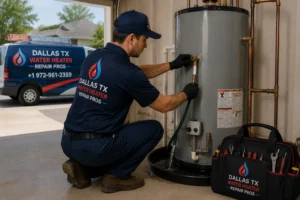
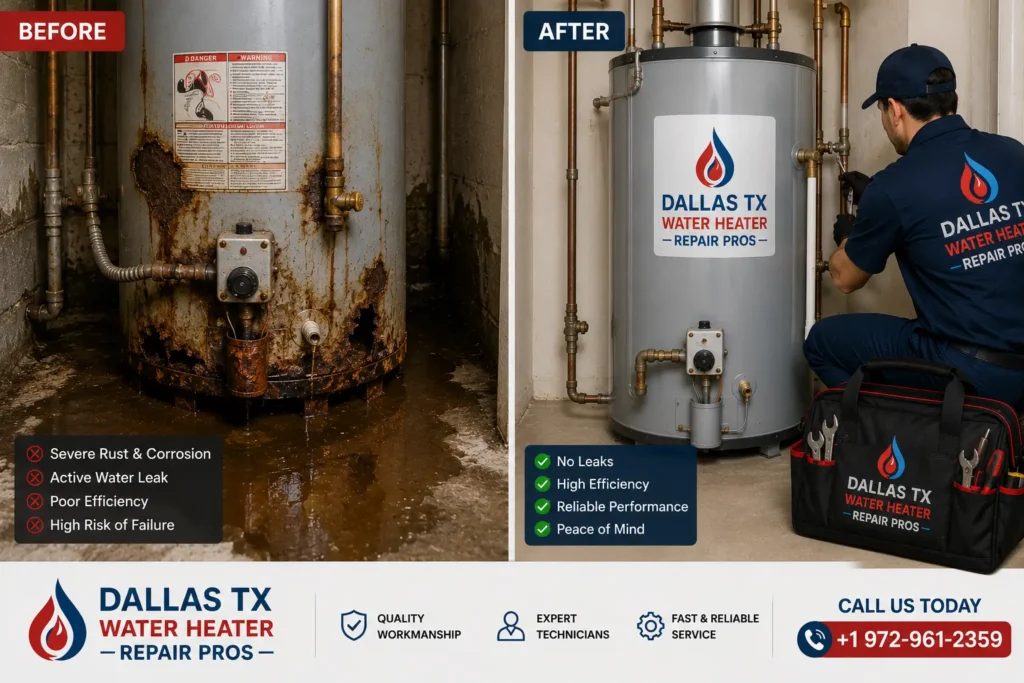
How We Diagnose Sediment, Rust, and Pressure Valve Problems in Your Tank Water Heater
01
Inspection
We open up your tank water heater and check the parts that actually matter: sediment level, anode rod condition, thermostat, pressure relief valve, and dip tube.
02
Diagnosis
We tell you exactly what we find, in plain language, before mentioning a single dollar amount. You hear the real cause, not a guess.
03
Service
Most sediment-related issues get flushed and fixed in that same visit. No second trip, no waiting days for a follow-up.
04
Testing
Before we leave, we test water temperature and confirm your pressure relief valve is working safely, not just assume it.
05
Recommendations
If a repair will hold, we say so. If replacement genuinely makes more sense for your tank water heater, we tell you that too, honestly.
Every job carries our 100% money back guarantee and a workmanship warranty.
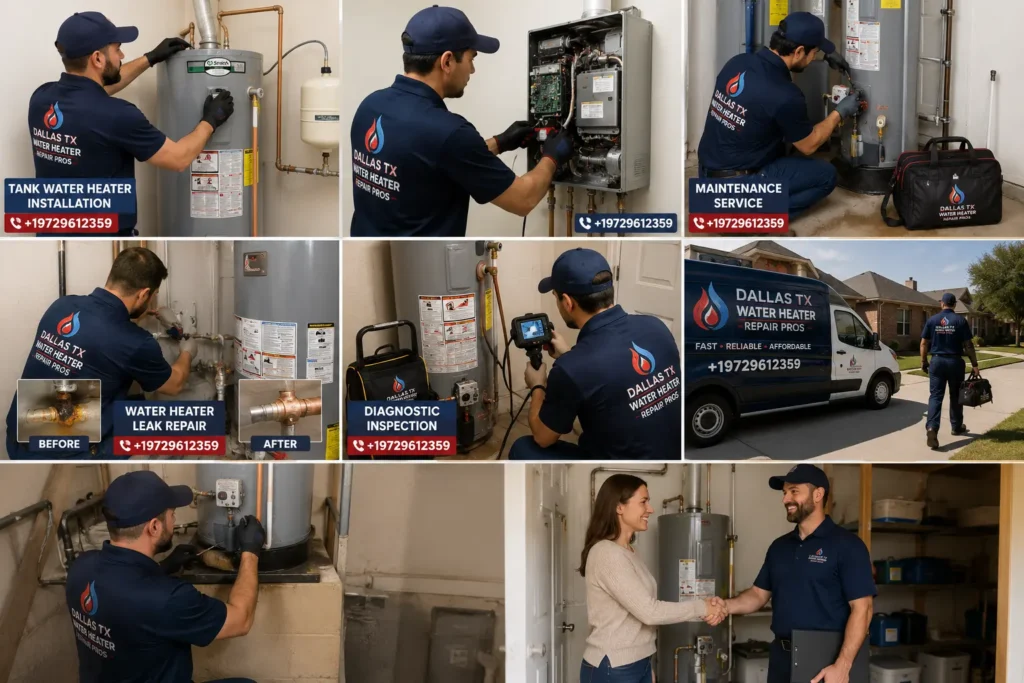
Lower Bills, No More Popping: What Fixing Your Tank Water Heater Actually Gets You
Catching sediment early instead of letting it sit for years means your tank water heater lasts closer to that 8 to 12 year mark instead of burning out at 6. It also means your energy bill stops creeping up for no clear reason, since an unmaintained tank can run 20 to 30 percent less efficient than one that’s been flushed regularly. Replacing a worn anode rod before it fails completely, usually a $150 to $250 part, is a lot cheaper than replacing a rusted-through tank. Catching a failing pressure relief valve early keeps your tank water heater operating safely instead of building dangerous pressure. And because every job comes with our money back guarantee, you’re covered if the fix doesn’t hold. If sediment keeps being a recurring fight, switching to a tankless system is worth a look too, since it handles Dallas’s hard water differently.
Why Dallas Homeowners Trust Us With Their Sediment, Rust, and Pressure Valve Problems
- 24/7 Emergency Availability
- Honest, Upfront Pricing
- Licensed & Insured
- Same-Day Service
A lot of companies hear “my tank water heater’s making noise” and go straight to talking about a new unit. We don’t, not until we’ve actually checked whether it’s just sediment, which it usually is. We’re a top rated choice for homeowners who want the real answer on their tank water heater, not the easiest sale. Every technician we send is a licensed plumber, not a subcontractor we’ve never vetted, and we’re available 24/7 in practice, meaning a real person picks up. We give you the price before we touch anything, and we’re honest when your tank water heater genuinely won’t cut it anymore. Not sure exactly what kind of service fits your situation? Our full range of water heater services is laid out in one place. If your issue turns out to be gas-related instead, our gas water heater repair page covers that side of things too.
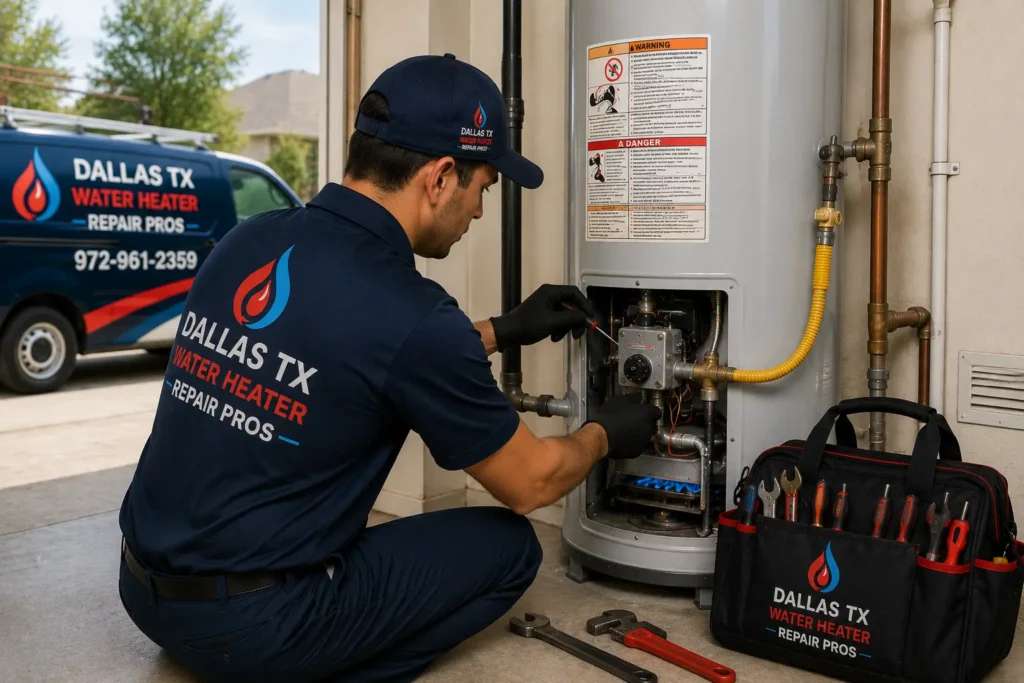
Licensed to Fix Tank Water Heater Sediment, Rust, and Pressure Valve Issues in Dallas
Dallas TX Water Heater Repair Pros is a fully insured plumbing company, and a residential plumber dallas homeowners have come to rely on for tank water heater problems. Our technicians hold valid Texas plumbing licenses through the state board that actually issues and tracks those licenses, with senior team members certified as master and journeyman plumbers. We follow Texas plumbing code on every tank water heater job, including permits where required, and every repair is backed by our 100% money back guarantee and workmanship warranty as real, standing protection. Want the longer version of who we are? Here’s more about our background. Got a question before booking? Just ask us directly.
Real Dallas Stories: Tank Water Heater Popping Noises, Rust, and Rising Bills Solved
A Real Call: The Rust-Colored Tank Water Heater That Wasn't a Dead Tank
Problem
A Highland Park area homeowner called after noticing their hot water had turned a noticeable reddish brown color over the course of a week, convinced their tank water heater was failing for good.
Solution
Our licensed technician inspected the tank and found the anode rod had fully corroded, a common outcome of Dallas’s extremely hard water on a rod that had never been checked or replaced. We swapped in a new anode rod and flushed out the sediment that had built up alongside it.
Outcome
The rust color disappeared within a day of the tank water heater running normally again, and the homeowner kept their existing tank running for years longer instead of paying for a full replacement.
Tank Water Heater Questions: Sediment, Rust, Anode Rods, and Pressure Valves
That’s almost always sediment sitting at the bottom of the tank, hardening as it heats up. Dallas’s hard water makes this happen faster here than in most places, and a flush usually clears it right up.
That’s mineral sediment breaking loose inside your tank water heater and making its way into your hot water lines. It’s not dangerous, but it’s a sign your tank needs attention
Yes, worth checking soon. It usually means the anode rod inside your tank has worn through and the tank itself has started rusting on the inside.
Once a year, at minimum. Dallas’s hard water builds sediment much faster than places with softer water, where every 2 to 3 years is often enough.
With regular flushing and anode rod checks, 8 to 12 years is realistic. Without any maintenance, Dallas’s hard water can wear a tank down in as little as 6 to 8 years.
It can be. That valve exists to release excess pressure safely, and a failing one is a real safety concern on any tank water heater, not something to put off.
Usually a sediment layer, a tired thermostat, or a worn dip tube, sometimes all three working against your tank water heater at once
In most cases, yes, especially for gas units. We handle the permit process as part of every installation.
Where We Fix Dallas Tank Water Heater Sediment and Rust Problems
We serve zip codes 75201 through 75205, including neighborhoods near Reunion Tower, Lake Forest, Park Cities, Highland Park, and University Park, plus nearby Irving and Richardson. Check the map below, or see the full list of cities we cover across the metro if you’re not sure whether your area is included.
Beyond Tank Water Heaters: Every System, One Licensed Team
Tank isn’t the only system we handle. Explore our other water heater services in Dallas:
Want to see our full lineup? Visit our water heater services page for everything we offer.
Need Hot Water Restored Today?
Popping Noise, Rusty Water, or Rising Bills? Let's Fix Your Tank Water Heater's Real Cause
Licensed plumbers who actually know what Dallas’s hard water does to a tank water heater, whether it’s the popping noise, the rust-colored water, or the anode rod that’s already worn through. Upfront pricing, and a guarantee that means something. New to the site? Start on our homepage to see everything we offer.